
3 hr 30 min
Hiroshima E-Bike Tour: Peace Park, Castle & Mitaki Temple
Explore Hiroshima's history and nature by e-bike, from Peace Park to a hillside temple.
Reserve
Hand-picked by our editors — only the best 5 experiences from 48 reviewed.
Verified partners for every tour, free cancellation where available, and instant confirmation on every booking.
3 hr 30 min
Explore Hiroshima's history and nature by e-bike, from Peace Park to a hillside temple.
Reserve
3 hr
Explore Hiroshima's A-bomb heritage sites by electric bike with a local guide who grew up in the city.
Reserve
3 hr 30 min
Pedal a flat, easy route past Hiroshima's most moving and beautiful sights in half a day.
ReservePrices from verified partners. Availability updates in real time at checkout. Free cancellation policies apply where shown.
The landmarks, rooms, and views travelers on this tour remember — all visible on a single visit.
This park serves as a solemn monument to the atomic bombing and a plea for world peace. It covers a vast area in the city center where visitors can walk and reflect
Also known as the Carp Castle, this landmark was rebuilt in 1958. It offers a window into the Edo period and houses historical exhibits
Constructed in 1620, this garden features a central pond with many islands and bridges. It remains one of the most serene locations in Hiroshima
The river runs through the city, providing a scenic backdrop for cycling routes. Many of the Hiroshima e bike tour paths follow the banks of this waterway
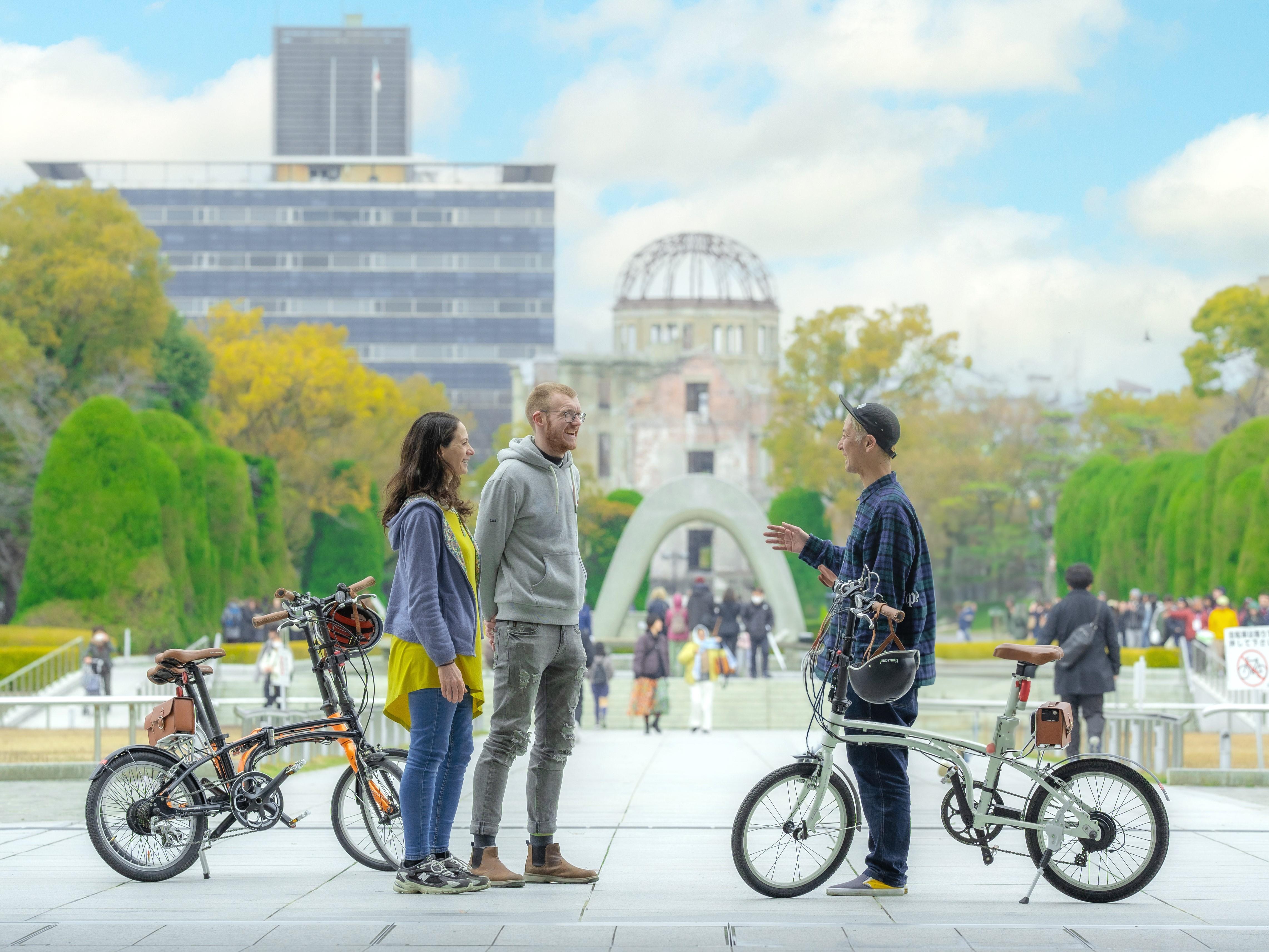
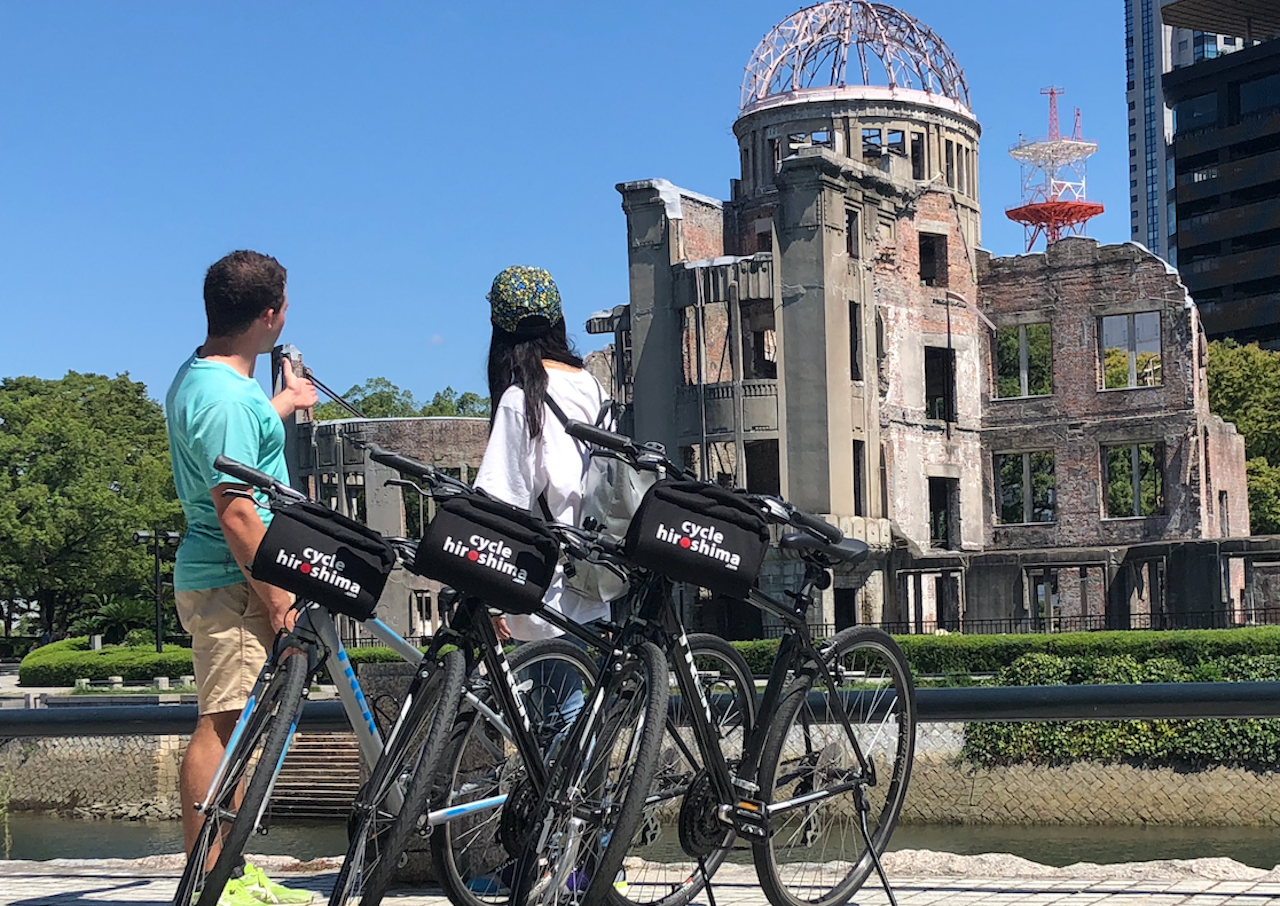
This UNESCO World Heritage site is the only structure left standing in the area of the explosion. It stands as a powerful reminder of history
The e-bike experience provides superior reach for distant landmarks, whereas the walking tour offers a deeper, focused connection to the Peace Memorial Park. Most travelers who prioritize citywide exploration prefer the hiroshima e bike tour for its efficiency.
| Feature | Top pick E-Bike Tour | Walking Tour |
|---|---|---|
Mobility Range |
High (citywide coverage) | |
Low (central park area) |
Site Coverage | Extensive (multiple city districts) |
Focused (park and immediate vicinity) |
Pace of Interaction | Rapid transit between points |
Slow and contemplative |
Group Dynamics | Small group cycling cohorts |
Intimate pedestrian focus |
Physical Exertion | Low (electric assist) |
Moderate (continuous walking) |
Accessibility | Requires cycling proficiency |
| See tickets → |
Verdict: Select these hiroshima e bike tour tours if you wish to see beyond the city center, or opt for a walking tour if you prefer a meditative approach to local history sites.
Choose your ticket, select your date, and reserve in under two minutes. Secure checkout handled by our verified partner.
Instant confirmation by email, with a mobile voucher you can save offline. No printing, no queuing at a collection desk.
Arrive at the entrance, show your voucher on your phone, and walk in. Most tickets include priority or skip-the-line access.
Practical details for your visit straight from our verified partners — hours, access, rules, and how to get there.
2-29 Kyobashi-cho, Minami-ku, Hiroshima
Primary hub for the Hiroshima e bike tour
Reach the Peacecle hub via Hiroshima Station, a central transit node.
Use local bike lanes to arrive at the 2-29 Kyobashi-cho address.
Participants of the Hiroshima e bike tour should wear comfortable athletic clothing suitable for cycling. Closed-toe shoes are recommended for safety while operating the electric bicycles.
Keep belongings minimal, as storage capacity is restricted at the Peacecle Tourist Information Site. Participants are responsible for their personal items throughout the bike excursion.
Photography is permitted during the Hiroshima e bike tour when the bicycle is safely parked. Refrain from operating cameras or recording devices while actively riding in city traffic.
The Hiroshima e bike tour requires the ability to balance and operate a bicycle safely. Consult with staff at the Peacecle Tourist Information Site for specific equipment accommodations.
Mobile phones should be secured in pockets or mounts during the Hiroshima e bike tour. Avoid handheld use while the wheels are in motion.
The Hiroshima e bike tour is generally suited for older children and teens who can confidently manage an electric bicycle. Check height requirements for bikes before booking your family excursion.
Carry water bottles in the provided bike cages to stay hydrated. Several local shops are accessible during the Hiroshima e bike tour stops.
Pets are not permitted on the Hiroshima e bike tour bicycles. No pet storage facilities are provided at the departure point.
The Hiroshima e bike tour utilizes electric-assist cycles to make navigating local hills easier. All riders must follow Japanese traffic laws while cycling.
2-29 Kyobashi-cho, Minami-ku, Hiroshima
Primary hub for the Hiroshima e bike tour
Get directionsBest time to go, insider tips, nearby landmarks, and the cancellation fine print — flip through to skim what matters to you.
How crowds, weather, and events shift across the year.
March to May offers mild weather perfect for long rides. Cherry blossoms bloom across the city landmarks.
June to August is warm; plan to arrive at 10:00 to avoid the midday peak heat.
September to November features comfortable temperatures and vibrant foliage.
December to February is cool, requiring layered clothing for outdoor cycling.
Small details that turn a good visit into a great one.
Bring extra water during the Hiroshima e bike tour in summer. Humidity levels can be high in August.
Secure your Hiroshima e bike tour tickets online to guarantee availability. Weekend slots fill quickly.
Observe all traffic signals during your Hiroshima e bike tour journey. Japan strictly enforces cycling rules.
Confirm your helmet fit at the Peacecle hub. Staff assist with adjustments before departure.
Ask your guide about the planned Hiroshima e bike tour path. They often suggest hidden spots along the way.
Non-bookable sights within a short walk — free to visit, easy to pair.
A site dedicated to the victims of the atomic bombing. It serves as a central point for reflection.
A historic reconstruction featuring a moat and museum. The grounds provide significant insight into feudal history.
A historic landscape garden featuring winding paths and tea houses. It is a quiet contrast to the urban center.
Houses a collection of French impressionist and Japanese modern art. It is located near the city center.
Flexible, no hidden fees.
Cancellations must be processed according to the booking platform terms. The base entrance fee is 0 JPY, but specialized tour services are subject to operator-specific refund windows.
Hand-picked options within walking distance — pick a district for vibe, or a specific hotel for convenience.
Convenient access to transit and the Hiroshima e bike tour departure site.
Central district with various boutique and luxury hotel options.
Close proximity to the tour meeting point.
Hiroshima is built on a delta, and its six rivers made it flat — a geography that turned an atomic-bombed city into one of Japan's easiest places to cycle. The Ota River splits into branches before reaching the Seto Inland Sea, depositing the sandbars on which the castle town rose in 1589. Mori Terumoto chose the site for its water access. Hiroshima Castle followed, a five-storey keep of black-lacquered timber. The 1945 blast levelled it; the present reconstruction dates to 1958 and now houses a museum of samurai-era Hiroshima. Reinforced-concrete replicas replaced what fire consumed, but the moat and stone base are original — pitted, mossed, and still holding the water line they held four centuries ago. A hiroshima e bike tour crosses that moat within minutes of leaving the delta's eastern bank. What survives matters as much as what was rebuilt. The Genbaku Dome, once the Prefectural Industrial Promotion Hall, was completed in 1915 to a design by Czech architect Jan Letzel. Its skeletal copper cupola stood almost directly beneath the detonation point, where the downward blast pressure spared the vertical walls. UNESCO inscribed it as a World Heritage Site in 1996. Across the river, Kenzo Tange's Peace Memorial Park opened in 1954, its arched cenotaph framing the Dome along a deliberate north-south axis — architecture as sightline, memory as urban plan. Beyond the centre, the terrain lifts. Mitaki Temple sits in cedar shade on the slopes of Mount Mitaki, founded in 809 and named for its three waterfalls. A vermilion two-storey pagoda, relocated from Wakayama in 1951, stands among moss-covered stone Buddhas and rows of weathered jizo statues. Pedal-assist motors make the gradient trivial; without them the climb deters most casual riders, which is precisely why Hiroshima cycling tours with local guides have multiplied since electric fleets arrived. The city's rental infrastructure supports this. Peacecle docking stations sit across the central wards, including the tourist information site at 2-29 Kyobashi-cho in Minami-ku, where entry costs 0 JPY and tour services are priced separately. Ferries at Miyajimaguchi extend the range to Itsukushima Shrine, whose floating torii has stood over tidal flats since 1168. Bike-and-boat itineraries stitch the two UNESCO listings together in a single day. A well-planned hiroshima e bike tour tour reads the delta the way its founders did — by water, by flatness, by the distances a body can cover between tides.
"Architecture as sightline, memory as urban plan."
A step-by-step walkthrough of the visit — what you'll see, how long each stage takes, and the details that matter.
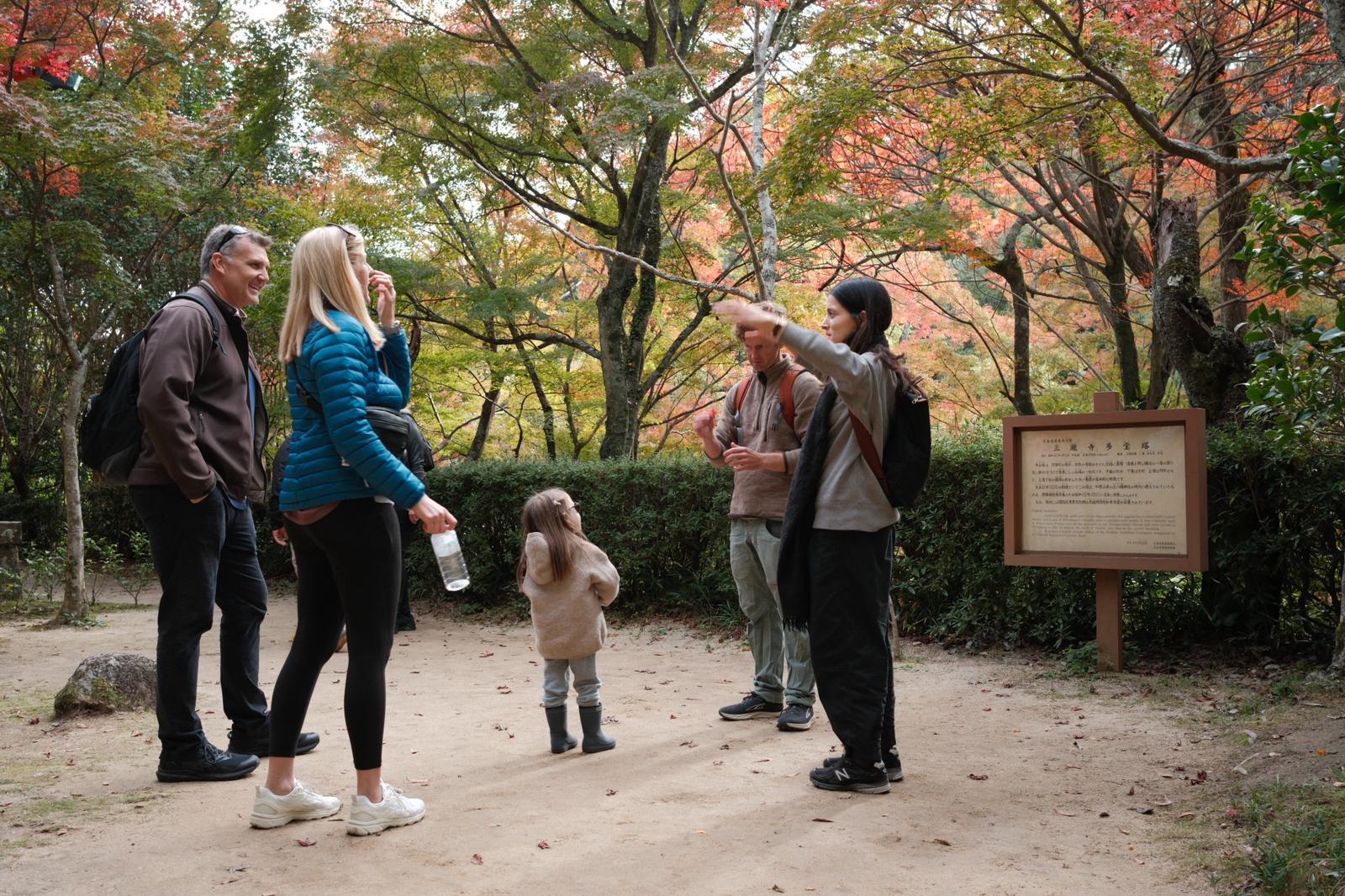
You arrive at the Peacecle site on Kyobashi-cho between 10:00 and 12:00, inside the 10:00–13:00 window the desk keeps on Tuesdays, Thursdays and Saturdays. A guide fits the saddle, explains the three assist levels, and hands you a helmet. Entry to the meeting point costs nothing — 0 JPY — with the ride itself charged separately. You push off eastward, then swing along the Kyobashi River. The motor engages at the first pedal stroke and the bridge gradient disappears under you. Within ten minutes you are circling Hiroshima Castle's outer moat, where carp hold position beneath the stone. You dismount, walk the gravel approach, and look up at the reconstructed keep. You ride on to Peace Memorial Park. Here you stop properly: the cenotaph, the Children's Peace Monument hung with folded paper cranes, the Dome's exposed ironwork across the water. Your guide talks quietly; nobody rushes you. Then the city thins. You follow quieter lanes north-west, the assist carrying you up toward Mitaki Temple, where cedar closes overhead and the noise drops to running water. You climb the stone steps on foot, pass the pagoda, and rest. The return is downhill and easy. You hand back the bike, and a Hiroshima cycling tour that covered fifteen kilometres feels like it cost you almost nothing. Longer bike-and-boat itineraries carry on to Miyajima; the hiroshima e bike tour tickets you hold determine where the day ends.
The Hiroshima e bike tour operates Tuesday, Thursday, and Saturday from 10:00–13:00.
The Hiroshima e bike tour is best for families with children who can confidently manage e-bikes.
The Hiroshima e bike tour service is free to enter at 0 JPY, though tour prices apply to rides.
The Hiroshima e bike tour starts at the Peacecle Tourist Information Site at 2-29 Kyobashi-cho.
Yes, booking Hiroshima e bike tour tickets online is recommended to ensure your spot is reserved.
The Hiroshima e bike tour office is a short distance from Hiroshima Station.
Photography is allowed during your Hiroshima e bike tour, provided you stop your bike safely first.
Prohibited items on the Hiroshima e bike tour include large luggage and drones to ensure rider safety.
Arriving between 10:00–12:00 ensures you have sufficient time for your Hiroshima e bike tour experience.
Cancellations for your Hiroshima e bike tour follow the standard platform refund rules.